

Companion to “How Joseph Franklyn McElroy and I Repositioned His Work—and How Founders Can Use AI Without Losing the Plot”
Most founders don’t need more visibility.
They already have content. Traffic. Social proof. Case studies. Tools.
What they lack is legibility.
Their work has evolved—but their positioning hasn’t kept up. And in an AI-saturated landscape, that gap becomes more dangerous, not less.
This companion piece breaks down how founders can use AI responsibly and strategically to reposition themselves—not as a content engine, but as a clarity tool.
The Core Mistake: Using AI to Amplify Instead of Diagnose
Most founders approach AI like this:
“Help me say this better.”
“Help me write more.”
“Help me rank higher.”
That’s amplification.
Repositioning requires diagnosis.
When used well, AI doesn’t make you louder—it helps you see where your message is unclear, diluted, or misinterpreted.
The goal isn’t better output.
The goal is better signal.
Step 1: Ask AI the Question You’ve Been Avoiding
Before prompts about content or SEO, start here:
“Based on everything you know about my work, what do you think I actually sell?”
If the answer sounds like:
-
a list of services
-
a grab-bag of capabilities
-
or something that could describe ten other founders
You’ve found the problem.
AI is especially good at surfacing where your positioning collapses into sameness—not because you lack depth, but because you haven’t named it clearly.
Step 2: Separate Execution From Judgment
One of the most common repositioning breakthroughs happens when founders realize this:
Execution is no longer their differentiator. Judgment is.
AI can:
-
write
-
summarize
-
optimize
-
generate
-
automate
What it cannot do well (yet) is:
-
contextualize tradeoffs
-
sense timing
-
read human risk
-
decide what not to do
If your positioning still leads with execution, you’re competing with tools instead of transcending them.
A useful AI prompt here:
“What decisions do clients rely on me for that AI tools cannot responsibly make alone?”
That answer is your advisory core.
Step 3: Use AI to Identify the Trust Break
In many founder brands, the issue isn’t lack of credibility—it’s misread credibility.
AI can help spot where:
-
breadth is mistaken for lack of focus
-
sophistication reads as complexity
-
intelligence reads as abstraction
Ask:
“Where might a skeptical buyer misunderstand my expertise or hesitate to trust me?”
This is where repositioning often shifts from explaining what you do to naming what’s broken for the buyer.
That shift—from descriptive to diagnostic—is where authority emerges.
Step 4: Name One Tension and Refuse to Let Go of It
Strong positioning doesn’t explain everything.
It owns one tension relentlessly.
Examples:
-
Visibility vs. Authority
-
Speed vs. Meaning
-
Growth vs. Integrity
-
Optimization vs. Wisdom
AI can help you test which tension:
-
consistently appears in your language
-
resonates across audiences
-
aligns with the work you want to do next
If you try to own five tensions, you own none.
One is enough.
Step 5: Demote the Concepts That Require Explanation
Founders often cling to frameworks they spent years developing.
That’s understandable.
But here’s a hard truth AI will surface quickly:
If a concept requires a paragraph of explanation before it lands, it doesn’t belong in the headline.
AI is excellent at flagging phrases that:
-
sound impressive
-
confuse first-time readers
-
distract from the core promise
This doesn’t mean killing your ideas.
It means moving them backstage—where they support authority instead of obscuring it.
What This Looks Like in Practice
When founders use AI this way, repositioning tends to result in:
-
Fewer services, higher trust
-
Shorter explanations, stronger resonance
-
Better conversations, not just more leads
-
A shift from “How does this work?” to “How do we start?”
That’s not coincidence.
That’s clarity.
A Final Word for Founders in the AI Era
AI is not here to replace judgment.
It’s here to expose where judgment is missing—or buried.
If your positioning feels heavy, diluted, or oddly ineffective despite good work, it’s likely not a marketing problem.
It’s a meaning problem.
Used well, AI doesn’t solve that for you.
But it can hold up a mirror long enough for you to see where you’re still flying in formation—when you no longer believe in it.
Ready to Break Formation?
The ideas explored in this essay are not theoretical. They are lived, tested, and distilled in Wild Ducks Don’t Fly in Formation, Joseph Franklyn McElroy’s latest book.
Part memoir, part strategic lens, and part quiet rebellion against copy-paste thinking, the book is written for founders, operators, and leaders who have outgrown templates—but still want results.
If you’ve ever felt the tension between:
-
Visibility and trust
-
Skill and judgment
-
Growth and meaning
This book is for you.
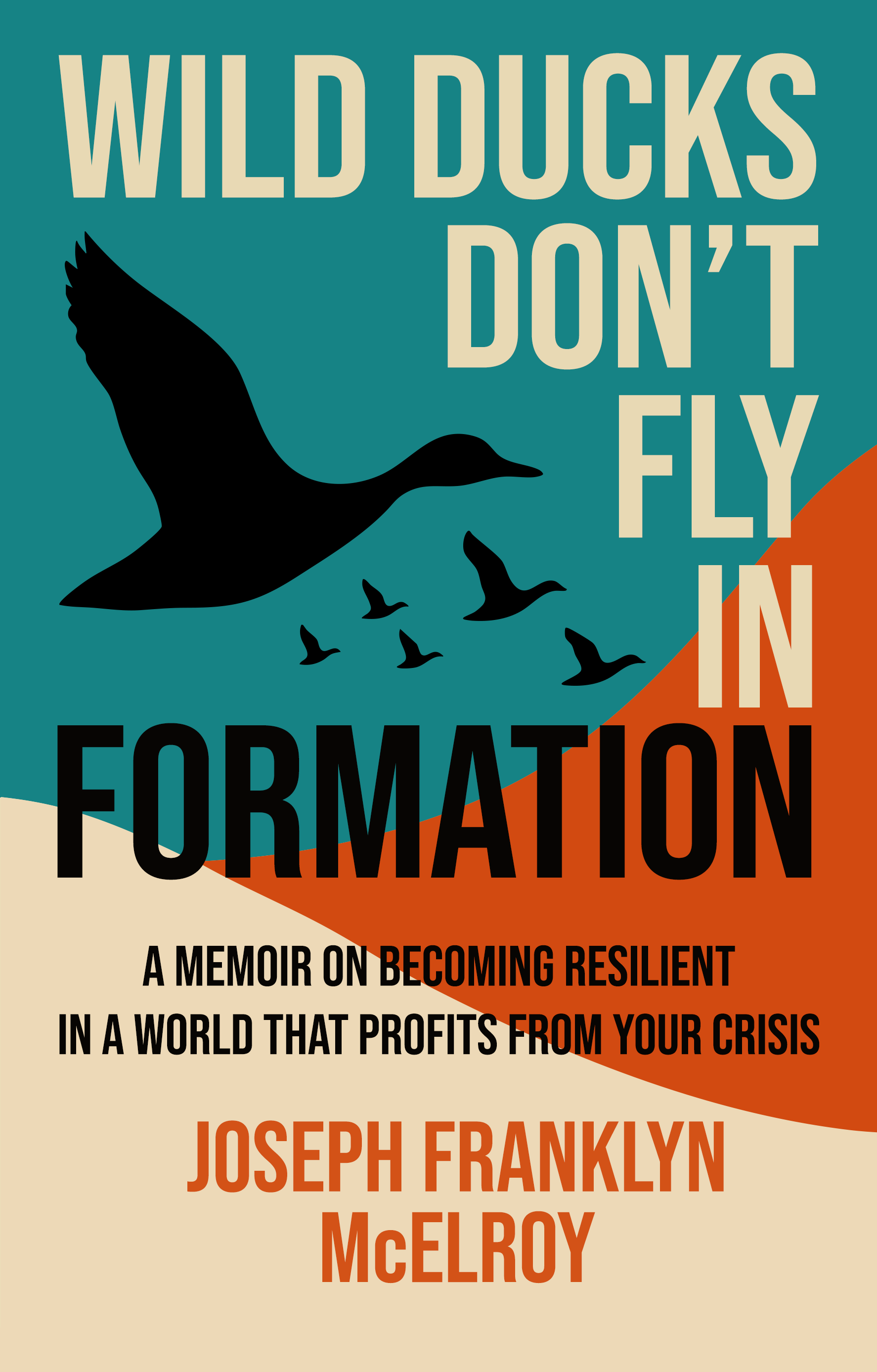
Wild Ducks Don’t Fly in Formation is now available on Amazon (December 2025) and serves as the philosophical backbone for the work described here—inviting readers to stop flying someone else’s pattern and start leading from clarity, conviction, and earned authority.
👉 Learn more, join the flock, and explore the movement at WildDucks.net
Because at some point, every wild duck realizes:
You were never meant to fly in formation.
This essay appears in Wild Ducks: A Wise Odyssey, drawing on ideas explored more fully in Wild Ducks Don’t Fly in Formation (published on Amazon in December 2025).

